Revisiting Photo Memories

When I’m guiding guests ashore, something will often catch my eye — light on rock, color in a tidepool, the shape of a plant or animal. If time allows, we pause and explore. If not, I’ll take a quick photograph — a note to my future self — trusting I’ll return later and look more closely.
Revisiting images is a little like rereading a good book. You return to the same place, but you are not the same reader. New details surface. New meaning appears.
One photo I revisited recently was of a cluster of barnacles. I’ve always loved watching them feed — their tiny “garage doors” opening and their cirri (those little feathery appendages) extending into the water, filtering invisible meals from the tide. When I took the picture, I was drawn to the pinks and greens and the open plates of the upper barnacle. Months later, looking again on my computer, I noticed something I had missed entirely — a small limpet tucked between two of them. A quiet companion hidden in plain sight. It made me smile. There is always more than meets the eye.
Another image brought back a tidepool moment at Fords Terror. I had noticed a milky cloud swirling around a painted anemone and snapped a few quick photos while keeping an eye on slippery rocks and wandering boots. At the time, it was simply a mystery I meant to investigate later. Then I forgot about it — until the image resurfaced during editing.

Suddenly I was back there — the scent of low tide over granite sand washed with cold, glacier-fed seawater, the cool air, the sound of the swift current moving through the narrows. Looking closely, I noticed not only the cloud near the anemone’s mouth and tentacles, but also a similar release from what appears to be a nearby mussel or other bivalve. That sent me digging through field guides and references. One explanation suggested a defensive mucus response to disturbance. Another possibility was spawning — a synchronized release of eggs or sperm. I’m not certain what I witnessed, but the photograph reopened the question and let the learning continue long after the tide had turned.
I often say that travel — especially slow travel — works on us over time. Sometimes it takes days, weeks, or even years to understand how an experience has changed us. Photographs help extend that process. They let us return. They help us see more clearly. They invite curiosity long after the moment has passed.
In researching that anemone image, I learned that painted anemones can live up to eighty years — a fact I hadn’t known before, and one I’ll be sharing with guests from here on out. That’s another gift of looking twice: deeper knowledge, richer stories, stronger connection.
For me, photography is a type of journaling and remembering. It is a way to strengthen our relationship with the places we visit. It deepens our connection to each other and to the natural world, and building connections remains one of the most important things we hope to offer every guest who travels with us.
Here’s to returning, noticing, and discovering what we missed the first time.
Sincerely,


 During this interactive workshop, you’ll have an opportunity to make photographs aboard the M/V David B as we cruise the awe-inspiring waters of Glacier Bay, exploring and photographing from the boat, skiff, and on land.
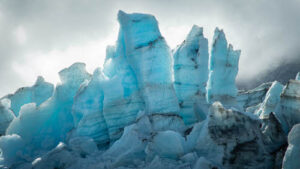 Lamplough blue is my favorite color. It’s the color of the Lamplough Glacier, in Glacier Bay National Park, Alaska. When the time and tide is right, we take the skiff ashore at Lamplough and walk near the snout of the glacier. The ground is hard-packed from the weight of the recently receded glacier. The walk gives you a grand perspective of the glacier. It’s a remarkable place for photography, sketching, writing, and personal reflection. We hope you’ll join us one day.