Common Creatures in Uncommon Places

Common Creatures in Uncommon Places


Coyote at South Sandy Cove
The last few weeks aboard David B have been filled with extraordinary experiences. We watched a wolf swim across an icy fjord channel, spent time with coastal brown bears at Pack Creek, visited glaciers, admired sunsets, and cruised through some of the most beautiful places in Southeast Alaska.

Yet one of the most memorable experiences of the season came from two creatures many people see every day: crows and coyotes.

On the second day of a recent trip, Jeffrey took us ashore to explore and make photographs on a beach I had long wanted to visit. The forest behind the shoreline had always intrigued me. Over the years I had watched bears emerge from its edge and, on one occasion, a wolf. What I noticed most often, however, were the crows. They were always there, carrying on conversations of their own.

As our guests wandered the beach with cameras in hand, I found myself drawn toward the forest.

Eventually, accompanied by our photo instructors and a few guests, I stepped through the fringe of alder and devil’s club and into the woods. The mossy ground was soft beneath our feet, and above us the crows moved through the canopy, calling, cooing, and flying from tree to tree.

Curious Crow – photo by Matthew Miller

We searched for signs of wildlife and found a bear daybed and scat, though its occupant was long gone. After a while, one of our instructors quietly asked if this might be a good place for a forest meditation. It was.

I invited everyone to find a tree to lean against or a comfortable place to sit. Then we settled into silence.

Forest Bathing in an Ancient Forest

For the next twenty minutes, the forest belonged to the crows. We listened as they called back and forth, rustled through the branches, and filled the woods with a surprising variety of sounds. Their behavior was fascinating, their presence engaging. By the time we returned to the beach, much of the conversation revolved around crows. These familiar birds, so often dismissed as nuisances, had become worthy subjects of curiosity and admiration.

That evening I went to bed feeling grateful for the experience. Not long afterward, Jeffrey woke me.

“Wake up! There are coyotes on the beach.”

They had emerged from the same forest where we had spent the afternoon. Their yips, barks, and songs had echoed across the anchorage before I arrived on deck. By then the chorus had ended, but the excitement remained. We watched as the coyotes crossed a sandbar from a small island to the mainland before disappearing into the gathering dusk.

The next morning, while making coffee, I heard them again.

Their songs drifted across South Sandy Cove, and I rushed on deck hoping for another glimpse. Soon I spotted movement on the beach. One coyote crossed the sandbar, then another. When the second reached shore, it began to call. Both animals lifted their voices together.

My heart pounded with happiness.

Coyotes and crows are remarkably adaptable creatures. They thrive in wild places and in our neighborhoods at home. Yet because they are common, we often overlook them.

Crow with Coyote

Over the course of a single day, our small group became captivated by both. By slowing down, watching, and listening, we discovered beauty in creatures we might otherwise have ignored. Now, whenever I hear a crow calling or a coyote singing near home, I’ll think of that forest, that anchorage, and the reminder that wonder is not reserved for rare wildlife alone. Sometimes it lives in the familiar beings sharing the world alongside us.


Sincerely,

Christine
Owner – Chef & Naturalist

P. S. If you are inspired to join us, just contact Sarah. You can see our current 2027 and 2028 schedules here: https://northwestnavigation.com/schedule-and-rates


She Brought Watercolors to Glacier Bay

She Brought Watercolors to Glacier Bay

Brown Bear and Pigeon Guillemots – watercolor by Becca Conway
One of my favorite things about life aboard the David B is watching how people choose to spend their time. There’s no single right way to experience a trip — some guests dive into books, others keep binoculars close for wildlife, some focus on photography, and many simply enjoy the conversations and shared moments that naturally unfold on the water. But I especially love when I see people leaning into curiosity and creativity. Last season, on one of our Glacier Bay trips, a guest named Becca Conway brought along a journal and a small set of watercolors. Throughout the week I’d often pass by her in the saloon, tucked into a cozy corner painting scenes from the day — wildlife encounters, landscapes, quiet moments underway. Whenever I glanced at her sketchbook, it made me smile. She wasn’t just observing the trip; she was engaging with it in a deeper way. 

Creative acts — whether sketching, journaling, photographing, or even paging through a field guide — have a way of rooting us in a place. Curiosity slows us down. Instead of feeling like we’ve simply “seen Alaska,” we begin to build a relationship with it. The memories we carry home become richer, more textured, and easier to share because we’ve interacted with the experience rather than just passing through it. 

And it’s worth saying: you don’t have to consider yourself an artist to enjoy being creative on the boat. Bringing a notebook, a camera, a watercolor set, or even just a willingness to ask questions and notice details can open up a whole new layer of experience. Creativity isn’t about performance — it’s about attention and connection. 

Becca’s paintings were wonderful little story capsules from the trip. One I especially loved showed a pod of killer whales we encountered, with three pigeon guillemots lifting off nearby, their bright red feet kicking up sprays of water. Seeing it captured that way brought the moment right back. 

Orca whale Sighting – watercolor by Becca Conway

At the end of the trip, I asked if she’d be comfortable letting us share some of her paintings. She graciously said yes, and I’m so glad she did. Looking at them now brings back not only those places we visited together, but also the quiet joy of watching someone engage so thoughtfully with the experience. 

Thank you, Becca, for letting us share your work — and for reminding us how creativity and curiosity can deepen any journey.

Sincerely,

Christine

P. S. If you are inspired to join us in 2026, just contact Sarah. You can see our current 2026 and 2027 schedules here: https://northwestnavigation.com/schedule-and-rates

Two humpback Whales

Two humpback whales

On one of our Alaska cruises trips last season, we came across a large group of humpback whales. There were maybe around 30 or so. I don’t know what they were up to, but they seemed to be busy at the surface. The main group was maybe a 1/2 mile from where we were watching them when these two surfaced in front of us on their way to join the others.

Sealions – The Grizzly of the Sea

Southeast Alaska is home to the Steller’s sea lion and these amazing animals are one of the most common marine mammals that we get to see aboard the David B. There are several haulouts in our cruising area and it’s a real experience to get to watch, hear, and smell a crowded haulout. One interesting tidbit about these sea lions is that their skulls are virtually indistinguishable from the skulls of grizzly, or coastal brown bears, as they are known in southeast Alaska. We once had a deckhand who liked to describe Steller’s sea lions as a grizzly stuffed into a tube.

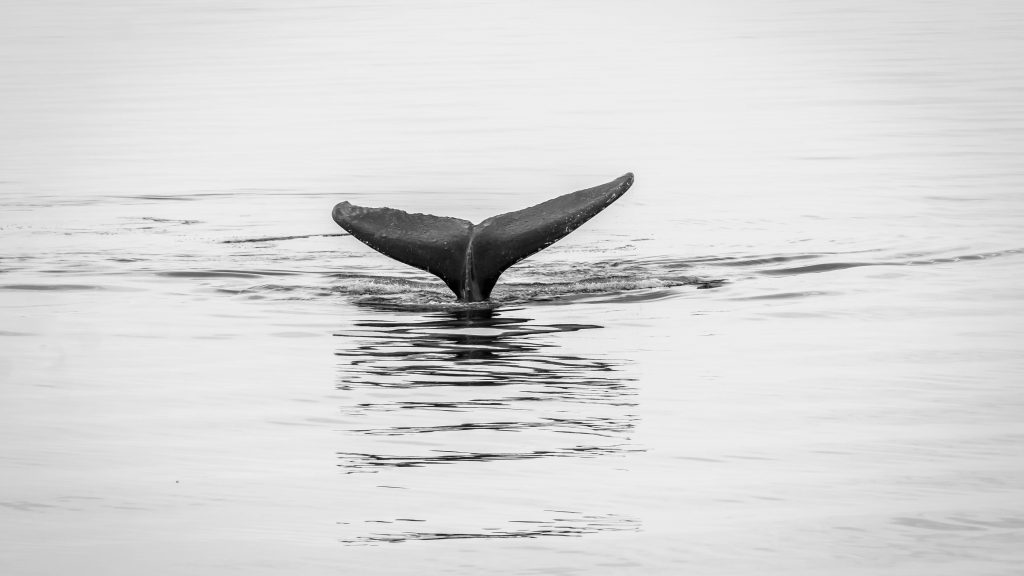
Humpback Whale Diving

Humpback whale diving in Alaska

Sometimes we will be sitting in an open area watching whales when one will surface and swim towards us. There are so many beautiful sounds: the whales’s breath, the sound of water cascading off its body, and the laughter and joy from our passengers.

Taken on one of Marine Ecology of Southeast Alaska trips.